
Advertisement
5 Dash Cams Popular in the UK for 2026
Clearer Footage, Better Protection: Choosing the Right Dash Cam for UK Roads

Julien Moreau
With more than 12 years of experience across automotive technology, in-car electronics and consumer products, Julien Moreau reviews dash cams from a practical buyer’s perspective. His comparisons focus on daytime and night-time video quality, front-and-rear coverage, app usability, GPS, parking protection, installation and overall value for drivers across the UK.
- julien@pickbeacon.com
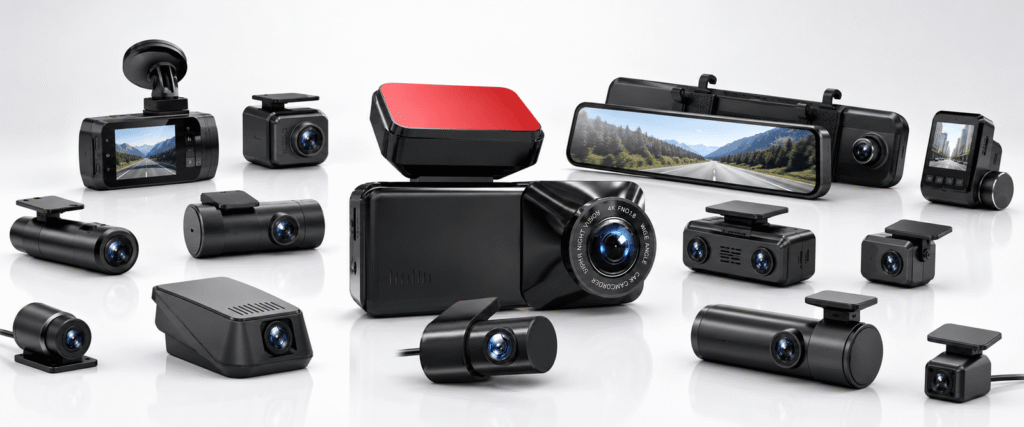
A reliable dash cam can provide a clear record of everyday journeys, unexpected incidents and parking-related impacts. For drivers across the UK, useful footage depends on more than resolution alone: bright headlights, dark winter commutes, heavy rain, country lanes, busy roundabouts and congested town traffic can all affect how clearly a camera captures number plates and surrounding road detail.
Modern dash cams range from discreet front-facing models to dual-camera systems with rear recording, GPS route data, Wi-Fi app control and parking monitoring. The right choice depends on the coverage you need, how neatly you want the camera to sit behind the rear-view mirror and whether you prefer straightforward local recording or more advanced connected features.
Below, we explain the key features worth comparing and review five relevant dash cams for UK buyers. Our first choice is the Noventrixa 4K Dual Dash Cam, selected for its balanced combination of front-and-rear coverage, generous storage support, useful smart connectivity and practical everyday value.
We Evaluated Dash Cams Based on 10 Key Criteria
- Front & Rear Video Quality
- Night-Time Clarity
- Field of View
- GPS & Speed Logging
- Wi-Fi & App Control
- G-Sensor & Emergency Lock
- Parking Monitoring
- Storage Capacity & Compression
- Installation & Windscreen Footprint
- Overall Value for Money
We used a structured comparison process focused on the features that matter during real journeys rather than headline specifications alone. Video resolution was considered alongside sensor quality, lens design, field of view and exposure control, because these factors determine whether road signs, vehicles and number plates remain useful in bright sunshine, rain and low-light conditions.
We also compared front-and-rear coverage, GPS route logging, Wi-Fi transfer, app usability, loop recording, emergency video locking and parking monitoring. Installation was another important factor: a good dash cam should sit neatly on the windscreen, use dependable power and allow the driver to retrieve important footage without unnecessary steps.
Finally, we assessed storage support, compression efficiency, accessory requirements and overall value. Some premium models add remote viewing and connected security, while others focus on dependable local recording. The rankings reflect how well each option balances clarity, convenience and cost for UK drivers using motorways, A-roads, urban streets and rural routes.
What You Should Look For
Front & Rear Recording
A front camera records the road ahead, while a dual-camera system also captures traffic behind the vehicle. For regular motorway driving, commuting or parking in busy areas, front-and-rear coverage can provide a more complete record of an incident. Compare the resolution and viewing angle of both cameras rather than focusing only on the front-camera specification.
Reliable Low-Light Performance
Night-time performance depends on the image sensor, lens aperture, glass quality and exposure processing. A camera with WDR or HDR can help balance bright headlights and darker areas of the road. This is especially useful on poorly lit country lanes, during winter commutes and in the UK’s changeable weather.
GPS, Wi-Fi & App Control
Built-in GPS can record route, speed and location data, while Wi-Fi allows footage to be viewed or downloaded through a mobile app. A well-designed app should make it straightforward to locate, save and share an important clip without removing the memory card.
Parking Mode & Storage
Loop recording automatically replaces the oldest unlocked clips when the card is full, while a G-sensor can protect emergency footage from being overwritten. For parking monitoring, check whether a hardwire kit is required. Also choose a high-endurance microSD card that matches the camera’s supported capacity and recording resolution.
What You Should Avoid
Choosing by Resolution Alone
A 4K label does not guarantee useful footage in every situation. Sensor quality, lens design, exposure control and compression all affect clarity. Compare real recording features and the complete camera system rather than relying on one headline number.
Ignoring Rear-Camera Coverage
A strong front camera may still leave an incomplete record if the rear camera is low resolution or has a narrow view. For dual-camera models, check both channels and consider how the rear unit will be mounted and wired.
Using an Unsuitable Memory Card
High-resolution dash cams write large amounts of data continuously. Standard or low-quality cards may fail prematurely or cause missing clips. Use a reputable high-endurance microSD card with the required speed class and capacity.
Overlooking Parking-Mode Requirements
Many parking-monitoring features need a hardwire kit or dedicated battery pack to operate when the ignition is off. Confirm the required accessory, installation method and low-voltage protection before relying on overnight recording.
5 Dash Cams Popular in the UK for 2026
We compared video quality, day-to-day usability, smart features, installation, storage and value across a selection of current dash cams. These five models offer distinct strengths for UK drivers, from accessible dual-camera coverage to premium connected vehicle security.

Price
£129
Our Rating
A+

REVIEW
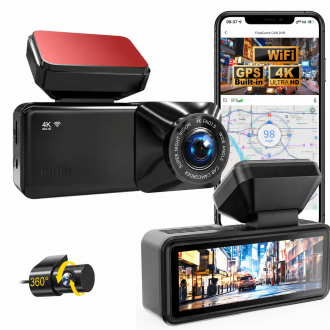
The Noventrixa 4K Dual Dash Cam presents a practical option for drivers, combining front-and-rear coverage with functional everyday features alongside many connected systems. The front camera records in up to 4K resolution at 3840 × 2160, while the 1080p rear camera helps capture traffic behind the vehicle. A 170° front view and 140° rear view offer broad coverage at busy junctions, on motorways and in town and city car parks.
Its 1/2.9-inch 8MP CMOS sensor, HiSilicon chipset, F1.8 aperture and multi-element glass lens are engineered to capture road detail in daylight and lower-light conditions. WDR processing helps balance bright headlights, street lighting and darker areas of the road during winter commutes and on poorly lit country routes.
The built-in 3-inch display allows in-vehicle viewing, while Wi-Fi and the FinalCamX app enable users to review, download and share recordings on Android or iOS devices. Integrated GPS can add route, speed and location information, while the three-axis G-sensor helps protect emergency clips from being overwritten during loop recording.
For longer journeys, H.265 compression manages storage efficiently and the system supports microSD cards up to 512GB. Type-C power, loop recording, emergency video locking and optional 24-hour parking monitoring support daily commuting, weekend travel and cars regularly left in public car parks. Parking monitoring requires a compatible hardwire kit.
The compact 86 × 65 × 35mm body and adjustable adhesive mount help maintain a neat windshield profile.
Overall, the Noventrixa combines 4K front recording, rear coverage, GPS, Wi-Fi, expandable storage capacity and a small footprint in a balanced package for UK drivers.
Pros
- 4K front and 1080p rear dual-camera recording
- 170° front and 140° rear wide-angle coverage
- 8MP CMOS sensor with F1.8 glass lens
- WDR processing for changing light conditions
- Built-in GPS, Wi-Fi and mobile app control
- Three-axis G-sensor with emergency video lock
- H.265 compression and up to 512GB storage
- Compact Type-C design with adjustable mount
- Optional 24-hour parking monitoring
Cons
- Often sells out during promotional periods
- Only available to purchase online

Price
£399
Our Rating
A

REVIEW
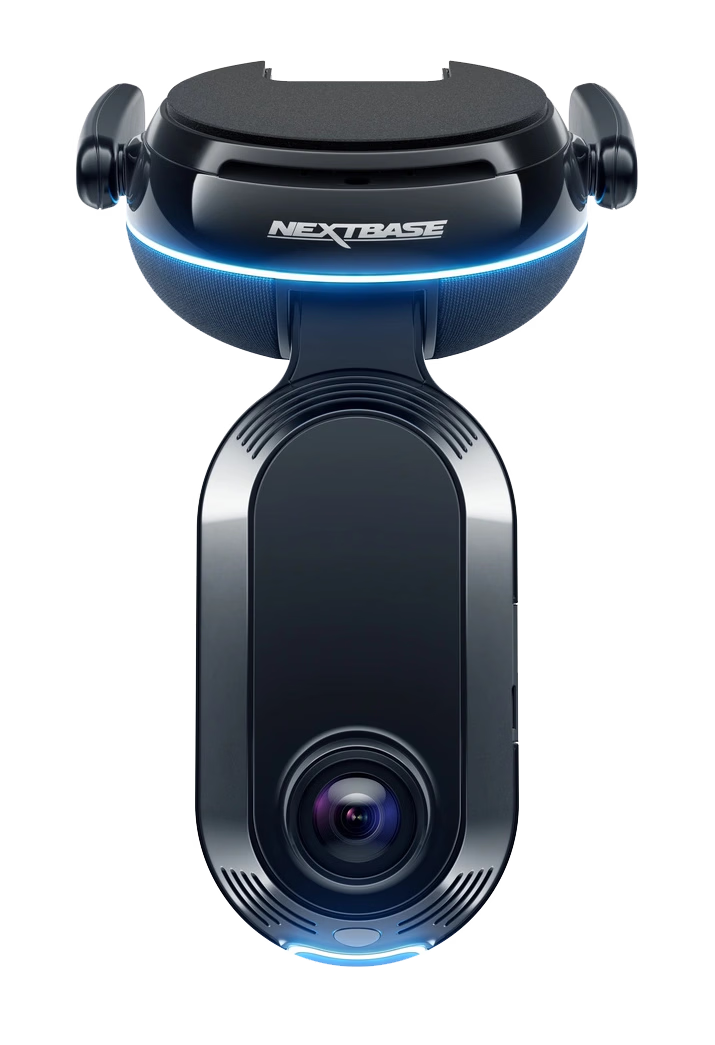
Built around continuous 4G LTE connectivity, the product offers high-resolution front recording up to 4K alongside remote functions like Live View, Smart Sense Parking alerts, and Witness Mode. However, drivers should note that accessing these cloud services and ongoing remote functionality requires an active monthly or annual subscription, which adds to the initial hardware investment.
From an installation perspective, the housing is noticeably larger than many standard dash cams, measuring around 169 × 67 × 62mm to fit its dual lenses, 4G hardware, and radar sensors. The fixed-angle mounting bracket fits standard windscreens, though fine-tuning the tilt across different vehicle glass curves may require extra attention. Rather than a traditional video screen, the main unit features a small status display, relying primarily on the companion smartphone app for live preview and footage downloads.
To support continuous smart monitoring, this 4K system connects via a vehicle’s OBD-II port or a hardwire setup for continuous power. As with most cellular-dependent devices, real-time alerts and live streams perform best in areas with steady 4G network coverage.
Overall, the iQ 4K targets modern drivers seeking integrated cloud features, provided they are comfortable with a larger windshield presence and an ongoing subscription model.
Pros
- 4K front recording
- Remote live view and smart alerts
- Guardian Mode and Witness Mode
- Emergency SOS support
- Optional rear-camera expansion
Cons
- Premium purchase price
- Subscription required for some connected features
- More involved installation than basic dash cams
- May offer more features than some drivers need

Price
£299
Our Rating
A-

REVIEW
The X310 4K stands out as a compact, screen-equipped option for drivers prioritizing user-friendly interaction, though its design choices introduce a few trade-offs. Built with a built-in 2.4-inch LCD touchscreen, it allows users to adjust settings and preview footage directly on the device, alongside high-resolution recording up to 4K and integrated GPS tracking. However, users should note that accessing cloud video storage and real-time remote Live View features requires an active cellular Wi-Fi setup or vault subscription, which can add to ongoing ownership costs.
From an installation perspective, the camera body is compact, measuring around 70 × 40 × 20mm, which helps keep the windshield profile minimal. Its magnetic mount offers quick attachment, though precise alignment on heavily curved windshields may require careful positioning. Rather than focusing heavily on dual-lens setups out of the box, the main unit is primarily engineered for single-channel front coverage, meaning rear camera integration requires separate expansion accessories.
To support driver awareness, the system features voice control and basic driver assistance alerts (such as forward collision warnings). While the internal battery supports temporary disconnects, full parking guard monitoring relies on a constant power connection via an optional constant power cable or hardwire kit.
Overall, the X310 4K targets drivers looking for an intuitive touchscreen experience and compact design, provided they are comfortable with adding extra accessories for multi-channel coverage or ongoing cloud services.
Pros
- Compact 4K front camera
- Voice control for key functions
- Built-in GPS journey data
- Simple app-based clip management
Cons
- Rear camera not included as standard
- Higher price than basic front-only models
- Parking features may require extra accessories
- Smaller system is less suited to full two-way coverage

Price
£289
Our Rating
B+

REVIEW
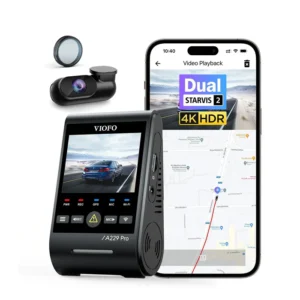
The A229 Pro 2CH is a strong enthusiast-focused option, combining 4K front recording with a 2K rear camera. Dual Sony STARVIS 2 sensors and HDR processing are designed to retain useful detail in difficult lighting, making this model particularly relevant for frequent night driving.
It also offers GPS, voice control and fast Wi-Fi transfer, while the dual-channel setup provides more complete front-and-rear evidence than a front-only camera. The system supports advanced parking modes when installed with the appropriate hardwire kit.
Its controls and settings provide more flexibility than many simple plug-and-play models, but that also means new users may need time to configure recording modes, sensitivity and parking options. The main camera is compact, although routing the rear cable still requires careful installation.
For buyers who prioritise image quality and customisation, the A229 Pro 2CH is a highly capable choice. Drivers seeking the simplest setup may prefer a more streamlined option.
Pros
- 4K front and 2K rear recording
- Dual Sony STARVIS 2 sensors
- Strong low-light and HDR performance
- GPS, voice control and fast Wi-Fi
Cons
- More settings to configure
- Hardwire kit required for advanced parking modes
- Rear-camera cable needs careful routing
- Premium memory card recommended

Price
£529
Our Rating
B+
REVIEW
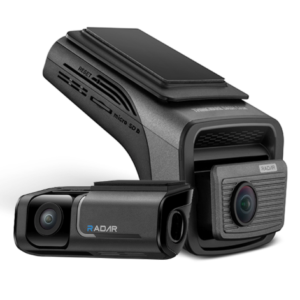
The U3000 4K serves as a security-focused dual-camera system engineered primarily around Radar motion detection and power efficiency, though its dedicated feature set introduces a few practical trade-offs. Utilizing Sony STARVIS 2 technology, it provides 4K front recording alongside 2K rear coverage for everyday driving scenarios. However, drivers should note that setting up advanced cloud notifications and remote vehicle monitoring requires a compatible mobile hotspot or internet connection in the car, which adds operational steps compared to built-in cellular units.
From an installation and usability perspective, the main body adopts a sleek, screenless wedge form factor designed to mount flat against the windscreen. Because it lacks a built-in display, initial camera alignment, setting adjustments, and footage viewing rely on the companion smartphone application via Wi-Fi or Bluetooth. Additionally, while the integrated RADAR sensor allows the system to remain in energy-saving parking mode until motion is detected, fine-tuning sensitivity levels across different parking environments may require trial and adjustment to avoid unnecessary wake-ups.
To support continuous parking guard functions, the system connects via a hardwiring cable or OBD-II power setup.
Overall, the U3000 4K targets safety-conscious drivers seeking Radar-assisted parking protection and high-resolution dual recording, provided they are comfortable with a screenless setup and relying on external connectivity for cloud features.
Pros
- 4K front and 2K rear recording
- Sony STARVIS 2 imaging
- Advanced radar-assisted parking surveillance
Cons
- High purchase price
- Hardwiring recommended for full parking features
- More complex than basic dash cams
- Installation may require professional help
- Connected features depend on setup and network access
- Overkill for drivers needing simple local recording
Our Featured Pick
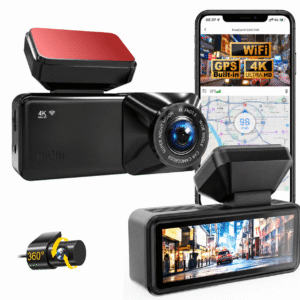
The Noventrixa 4K Dual Dash Cam is our featured pick for UK drivers because it offers a practical balance of recording quality, front-and-rear coverage and everyday usability. Its 4K front camera, 1080p rear camera, wide viewing angles and WDR processing help capture more useful road detail across changing light and weather conditions.
Built-in GPS, Wi-Fi app control, a three-axis G-sensor and automatic emergency video locking make important footage easier to locate and protect. H.265 compression and support for microSD cards up to 512GB provide generous capacity for longer journeys, while the compact Type-C design keeps the installation neat.
For drivers seeking a dual-camera system without moving into the higher cost and subscription requirements of premium connected models, the Noventrixa offers the strongest overall value in this comparison.